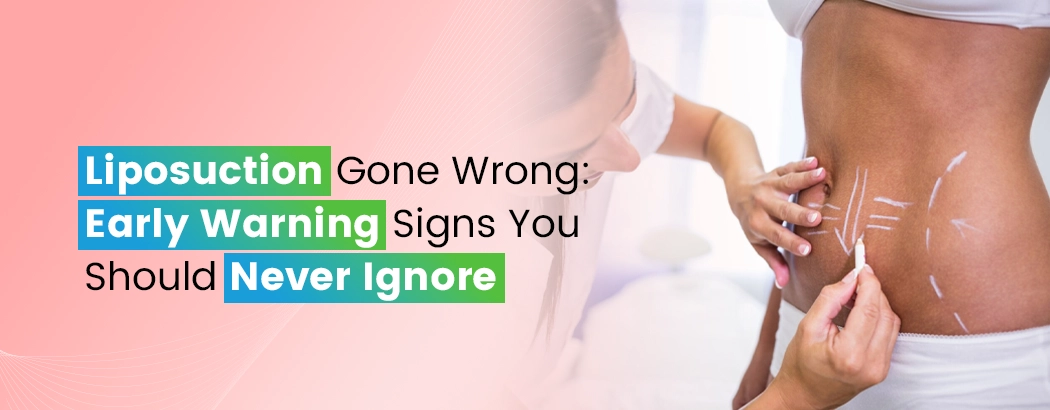
Liposuction Gone Wrong: Early Warning Signs You Should Never Ignore
You planned everything carefully and imagined the results. A flatter abdomen. Better-fitting clothes. Renewed confidence. Liposuction felt like the final step toward the body you wanted.
But what if recovery does not feel right?
At first, you assume it is normal. Swelling and bruising are expected. Then something changes. The pain feels sharper. One side looks more swollen. The skin feels unusually tight.
This is the moment many patients ignore.
Liposuction is safe in the right hands, but complications can happen. Recognizing early warning signs can make all the difference.
What Is Normal After Liposuction?
After surgery, some symptoms are expected. These are part of the healing process and usually improve over time.
Common normal symptoms include:
-
Mild to moderate swelling
-
Bruising around treated areas
-
Temporary numbness
-
Mild discomfort
-
Slight firmness under the skin
These symptoms gradually reduce over weeks with proper care and follow-up.
The keyword here is gradually.
If your symptoms are worsening instead of improving, your body may be signaling something important.
Early Warning Signs You Should Never Ignore
Not every discomfort is dangerous, but some signs require immediate attention. Ignoring them can lead to serious consequences.
Below is a clear comparison to help you understand the difference between normal recovery and potential complications.
|
Symptom |
What It Could Mean |
When To Seek Help |
|
Increasing severe pain |
Possible infection or internal fluid collection |
If pain worsens instead of improving |
|
High or persistent fever |
Infection spreading in the body |
Fever above 100.4 F after initial recovery days |
|
Uneven extreme swelling |
Hematoma or seroma formation |
One side is significantly larger or tense |
|
Skin turning dark, pale, or purple |
Poor blood supply to the tissue |
Immediate consultation required |
|
Foul-smelling discharge |
Active infection |
Urgent medical attention |
|
Hard lumps that persist |
Irregular healing or fibrosis |
If lumps do not soften over time |
|
Shortness of breath |
Rare but serious complication |
Emergency evaluation needed |
These signs are not meant to create fear. They are meant to create awareness.
Why Do Liposuction Complications Happen?
Complications are often linked to preventable factors. Understanding them can help you make safer decisions.
|
Risk Factor |
How It Increases Risk |
|
Unqualified surgeon |
Poor technique and improper planning |
|
Non-accredited facility |
Lack of emergency preparedness |
|
Removing excessive fat in one session |
Increased strain on body systems |
|
Ignoring medical history |
Undiagnosed conditions can worsen recovery |
|
Poor postoperative care |
Infection and delayed healing |
|
Choosing based on cost alone |
Compromised safety standards |
Choosing a surgeon is not about finding the lowest price. It is about finding the highest standard of care.
The Emotional Impact When Things Go Wrong
When liposuction does not go as planned, the emotional toll can be heavy.
Patients often experience:
-
Regret about their decision
-
Fear of permanent damage
-
Embarrassment
-
Loss of confidence
-
Anxiety about additional procedures
Many suffer silently. They hesitate to talk about complications because they feel responsible for choosing surgery.
But complications are not a personal failure. They are medical situations that require medical solutions.
The earlier you speak up, the better your chances of correction.
Can Complications Be Treated?
In many cases, yes.
Modern plastic surgery offers corrective procedures that can address:
-
Contour irregularities
-
Asymmetry
-
Residual fat deposits
-
Skin depressions
-
Scar issues
However, revision surgery is often more complex than the original procedure. Healing may take longer. Emotional stress may be higher.
This is why early detection of warning signs is critical.
Minor issues caught early are easier to manage than advanced complications.
When Should You Contact Your Surgeon?
You should seek immediate evaluation if:
-
Pain is increasing rather than decreasing
-
Swelling becomes tight or rapidly enlarges
-
You notice redness spreading
-
Fever develops after initial recovery
-
You feel short of breath
-
You sense something is not right
Trust your instincts.
Many patients later admit they felt something was wrong but waited, hoping it would resolve on its own.
Hope is not a recovery plan.
Prevention Is Always Better Than Correction
Before undergoing liposuction, ask yourself important questions:
-
Is my surgeon certified and experienced in body contouring?
-
Is the facility properly equipped for emergencies?
-
Have I understood the risks clearly?
-
Do I feel comfortable asking questions?
A responsible surgeon will never rush you. They will explain risks openly and guide you honestly.
Transparency is a sign of professionalism.
The Truth Most Patients Learn Too Late
Liposuction complications rarely start dramatically. They begin quietly.
A swelling that feels unusual. A sharper pain. A color change. A lump that does not improve.
Ignoring these signs can turn a small issue into a serious problem. Listen to your body and seek medical advice early. Timely action can protect your health, your results, and your confidence.