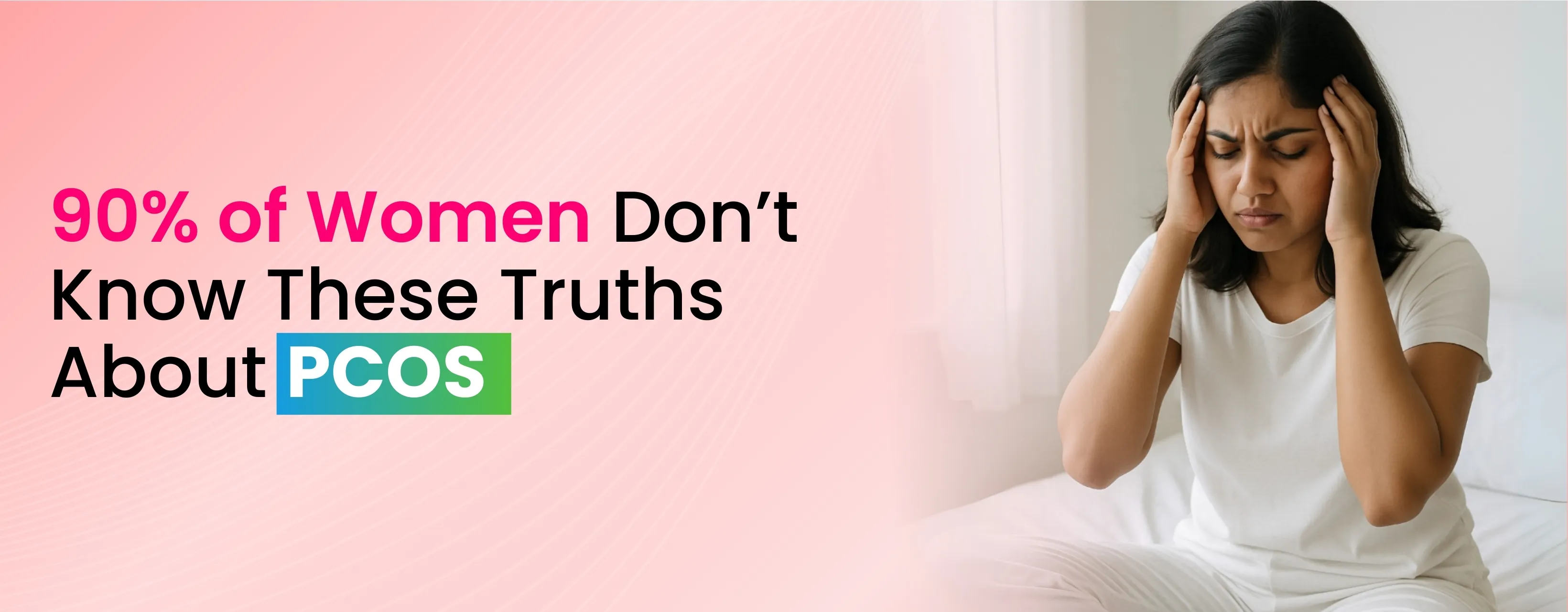
90% of Women Don’t Know These Truths About PCOS
Polycystic Ovary Syndrome, or PCOS, is one of the most misunderstood conditions in women’s health. Millions of women live with it, yet many do not fully understand what is happening inside their bodies.
Irregular periods, sudden weight gain, acne, mood swings, hair fall, and trouble conceiving can feel overwhelming. What most people don’t realize is that PCOS is not just a hormone problem. It influences your lifestyle, mental wellbeing, metabolism, and long-term health.
This guide explains the important facts that often go unnoticed. If you or someone you know is dealing with PCOS, this blog will help you understand the condition in a clearer and more meaningful way.
What Exactly Is PCOS?
PCOS is a hormonal imbalance where the ovaries produce higher levels of androgens, also known as male hormones. This imbalance affects the menstrual cycle, metabolism, skin health, fertility, and more.
What makes PCOS tricky is that it does not appear the same for everyone. Some women might show obvious symptoms like acne or irregular periods, while others may look completely healthy on the outside but struggle internally.
1. It’s Not Just About Weight Gain
Most people think PCOS equals weight gain. But this is only a small part of the picture. PCOS is a whole-body condition. It affects:
-
Skin
-
Hair growth
-
Hair fall
-
Mood
-
Sleep
-
Energy levels
-
Stress responses
-
Metabolism
Women with PCOS may experience:
-
Acne that does not respond to normal products
-
Unwanted facial or body hair
-
Thinning scalp hair
-
Extreme fatigue
-
Mood swings
-
Anxiety or mild depression
-
Bloating
-
Cravings for sugar
These symptoms happen because your hormones are not working in sync. Weight is just one outcome, not the whole story.
2. You Don’t Need to Have Cysts to Have PCOS
This is one of the biggest myths. Despite the name, not every woman with PCOS has cysts on her ovaries.
Diagnosis is based on three things:
-
Irregular or absent periods
-
High androgen levels
-
Cysts on the ovaries
If you have any two of these, doctors can diagnose PCOS.
Many women feel shocked when their ultrasound is normal but their report still says “PCOS”. But this is completely normal. The cysts are not the disease. The hormone imbalance is.
3. PCOS Can Affect Fertility, but Pregnancy Is Still Very Possible
Yes, PCOS makes conception more challenging. This is because ovulation becomes irregular. But this doesn’t mean pregnancy is impossible.
Many women with PCOS conceive naturally after adopting a healthy lifestyle. Others may need support like:
-
Ovulation-inducing medicines
-
Inositol supplements
-
Weight management
-
Stress reduction
-
Controlled ovarian stimulation
-
IVF (in rare cases)
Thousands of women with PCOS become mothers every year. Fertility is affected, but not destroyed.
4. Lifestyle Changes Are More Powerful Than You Think
PCOS has no permanent cure, but it’s one of the few conditions that respond beautifully to lifestyle changes.
Small improvements can bring big results:
Diet
Choosing whole foods, adding protein, reducing sugar, and managing carbs help balance insulin levels.
Exercise
Workout routines like:
-
Walking
-
Strength training
-
Yoga
-
HIIT
can regulate hormones, improve metabolism, and stabilize ovulation.
Sleep
7 to 8 hours of uninterrupted sleep helps control stress hormones, which reduces PCOS symptoms.
Stress Management
Stress directly impacts your hormones, so practices like meditation, journaling, and breathing exercises make a real difference.
PCOS doesn’t go away overnight, but your symptoms can become significantly better with consistent habits.
5. Symptoms Vary For Every Woman
No two women experience PCOS the same way. For one, symptoms may be mild. For another, they may be intense.
Common variations include:
-
Some people gain weight easily. Others stay lean.
-
Some have frequent breakouts. Some have clear skin.
-
Some have long gaps between periods. Others still bleed monthly.
-
Some face excessive hair growth. Others lose hair rapidly.
This is why PCOS often remains undiagnosed for years.
Understanding YOUR version of PCOS is the key to managing it effectively.
6. Early Awareness Can Prevent Bigger Health Issues
Because PCOS affects hormones and insulin, ignoring it can lead to long-term health complications like:
-
Type 2 diabetes
-
High cholesterol
-
High blood pressure
-
Thyroid problems
-
Heart disease
-
Infertility
-
Endometrial concerns
The earlier you understand and manage PCOS, the more you protect your long-term health.
Regular check-ups, blood tests, lifestyle changes, and medical guidance can save you from bigger problems later.
7. PCOS Affects Mental Health Too
Many women feel embarrassed or frustrated by their symptoms. Acne, weight gain, hair fall, or irregular periods can impact confidence. Hormonal imbalance itself can lead to:
-
Anxiety
-
Low mood
-
Irritability
-
Emotional sensitivity
-
Stress eating
-
Sleep issues
PCOS is not just a physical condition. It affects your mental wellbeing too. Getting emotional support, talking to a doctor, or practicing mindfulness can help.
8. PCOS Is Not Your Fault
One of the most important truths: PCOS is not something you caused.
It is linked to:
-
Genetics
-
Hormone imbalances
-
Insulin resistance
-
Environmental factors
Lifestyle affects symptoms, not the root cause. So stop blaming yourself. This condition is manageable with the right care and information.
9. PCOS Management Is a Journey, Not a Quick Fix
Women often want fast results. But PCOS reacts slowly and steadily.
-
Your periods may take months to regulate
-
Weight may drop gradually
-
Skin and hair changes take time
-
Hormonal balance improves step by step
Consistency matters far more than speed. PCOS management is about long-term stability, not quick transformations.
10. You Don’t Need to Do It Alone
PCOS can feel lonely, especially when people around you don’t understand what you’re going through. Talking to a doctor, nutritionist, or women’s health expert can help you get:
-
A customized diet plan
-
Proper medical testing
-
Hormone-balancing guidance
-
Emotional support
-
A long-term strategy
PCOS becomes much easier when you have the right support system.
Takeaway
PCOS is complicated, yes, but it doesn’t have to control your life. Understanding what’s really happening in your body can help you feel more confident, calm, and empowered.
-
Know your symptoms
-
Make small lifestyle changes
-
Get regular check-ups
-
Manage stress
-
Seek expert guidance
Every small step brings you closer to balance, better health, and more control over your body.
Remember, you are not alone in this journey. Awareness is the first step toward healing.