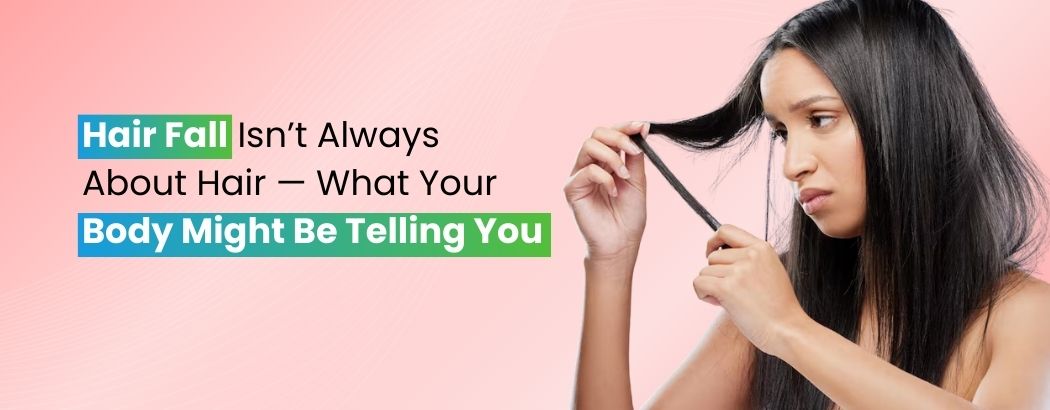
Hair Fall Isn’t Always About Hair — What Your Body Might Be Telling You
Hair fall is one of the most common concerns people face today, and also one of the most misunderstood.
Most people believe hair loss starts and ends with the scalp: change the shampoo, apply oil, try a serum, take a supplement, and the problem should disappear. But for many, hair fall continues despite doing “everything right.
Here’s the truth most people don’t hear often enough:
Hair fall is not always a hair problem.
In many cases, it’s your body’s way of signaling that something deeper is out of balance.
From hormonal changes and nutritional deficiencies to stress and underlying medical conditions, hair loss is often a symptom, not the root cause. And unless that root cause is identified and treated, no product alone can fix it.
This blog will help you understand why hair loss occurs, what your body might be trying to tell you, and how a medical and holistic approach makes all the difference.
Understanding Hair Fall: More Than a Cosmetic Issue
Hair growth is a complex biological process. Each hair strand goes through a life cycle that includes growth, rest, and shedding. Losing 50–100 hairs a day is normal. But when hair fall becomes excessive, sudden, or long-term, it usually indicates something beyond normal shedding.
Hair follicles are extremely sensitive to changes in the body. When internal systems are under stress, hair is often the first place where the impact becomes visible.
Common Signs Your Hair Fall Is Not Normal
-
Sudden increase in hair shedding
-
Thinning hair or widening part line
-
Receding hairline
-
Hair becoming weak, dry, or brittle
-
Hair fall accompanied by acne, weight changes, or irregular periods
-
Hair loss after illness, pregnancy, or emotional stress
If you notice these signs, it’s time to look beyond hair products.
What Your Body Might Be Telling You Through Hair Fall
Below is a clear breakdown of internal causes of hair fall and what they may indicate.
📊 Hair Fall Causes & What They Mean
| Hair Fall Trigger | What It May Indicate |
|---|---|
| Sudden heavy hair shedding | Stress, illness, hormonal shock |
| Gradual thinning | Hormonal imbalance, genetics |
| Hair fall with acne | PCOS or hormonal imbalance |
| Hair loss after pregnancy | Postpartum hormonal changes |
| Brittle, dry hair | Nutritional deficiency |
| Hair fall with fatigue | Iron deficiency or thyroid issue |
| Patchy hair loss | Autoimmune condition |
| Hair thinning with weight gain | Hormonal or metabolic imbalance |
This table shows one clear thing:
👉 Hair fall is often the result of what’s happening inside your body.
Hormones and Hair Fall: A Powerful Connection
Hormones play a crucial role in hair growth. Any imbalance can disrupt the hair cycle.
Hormonal Factors That Cause Hair Loss
-
PCOS (Polycystic Ovary Syndrome)
Elevated androgens can weaken hair follicles, leading to thinning and hair fall. -
Thyroid Disorders
Both hypothyroidism and hyperthyroidism affect hair growth and texture. -
Post-pregnancy Hormonal Shifts
A sudden drop in estrogen after delivery can cause excessive shedding. -
Menopause
Hormonal decline affects hair density and strength.
When hair fall is hormone-related, topical treatments alone are not enough. Medical evaluation is essential.
Nutritional Deficiencies That Show Up in Your Hair
Your hair needs nutrients to grow and stay strong. Deficiencies often show first in hair and skin.
Key Nutrients Linked to Hair Health
-
Iron
-
Vitamin D
-
Vitamin B12
-
Protein
-
Zinc
-
Omega-3 fatty acids
Low levels of these nutrients can result in:
-
Increased hair fall
-
Slow hair growth
-
Weak hair strands
-
Dull, lifeless hair
Many people unknowingly suffer from these deficiencies, especially women.
Stress: The Silent Hair Killer
Chronic stress pushes the body into survival mode. Hair growth becomes a low priority.
Stress can trigger a condition called telogen effluvium, where a large number of hair follicles enter the resting phase prematurely, causing sudden shedding weeks or months later.
Signs Stress Is Affecting Your Hair
-
Hair fall after emotional trauma
-
Hair shedding after illness or surgery
-
Difficulty sleeping
-
Anxiety and fatigue
Managing stress is not optional — it’s essential for hair recovery.
Lifestyle Habits That Make Hair Fall Worse
Sometimes, daily habits silently contribute to hair loss.
Common Hair-Damaging Habits
-
Crash dieting or extreme calorie restriction
-
Poor sleep quality
-
Smoking and alcohol consumption
-
Excessive heat styling
-
Tight hairstyles
-
Overuse of chemical treatments
Hair reflects how you treat your body overall.
Why DIY Solutions Often Fail
Many people try multiple home remedies before consulting a doctor. While oils and masks can improve hair texture, they cannot fix internal problems.
Why Home Remedies Don’t Solve Chronic Hair Fall
-
They don’t correct hormonal imbalances
-
They don’t treat nutritional deficiencies
-
They don’t diagnose medical conditions
-
They delay proper treatment
Hair fall that lasts more than 3–4 months needs professional evaluation.
The Right Way to Approach Hair Fall Treatment
The best approach to hair loss is medical + cosmetic + lifestyle care.
A Proper Hair Fall Treatment Plan Includes:
-
Medical evaluation
-
Blood tests (if required)
-
Hormonal assessment
-
Nutritional correction
-
Advanced dermatological treatments
-
Lifestyle guidance
This comprehensive approach treats the cause, not just the symptom.
Advanced Hair Fall Treatments (When Needed)
Depending on the diagnosis, medical treatments may include:
-
Medical therapies to control hair fall
-
Scalp treatments to strengthen follicles
-
Hair growth stimulation procedures
-
Hair transplant (for advanced hair loss)
These treatments should always be personalized.
Why Women Need Special Attention for Hair Fall
Women’s hair loss is often linked to gynecological health.
Conditions like:
-
PCOS
-
Hormonal imbalance
-
Pregnancy-related changes
-
Menstrual irregularities
require coordination between gynecology and cosmetic dermatology — not just one specialist.
The Emotional Impact of Hair Loss
Hair loss doesn’t just affect appearance — it affects confidence, self-esteem, and emotional well-being.
Many people experience:
-
Social anxiety
-
Low confidence
-
Avoiding photos or mirrors
-
Emotional distress
Acknowledging this emotional side is just as important as treating the physical cause.
When Should You See a Doctor?
You should consult a specialist if:
-
Hair fall is persistent
-
Hair thinning is increasing
-
Hair loss is sudden or patchy
-
Hair fall is linked with hormonal symptoms
-
Home remedies haven’t worked
Early intervention leads to better results.
How Minnerva Clinic Can Help
At Minnerva Clinic, hair fall is not treated as just a cosmetic concern — it’s treated as a health signal.
What Makes Minnerva Clinic Different?
-
Expert cosmetic and medical care under one roof
-
Focus on root-cause diagnosis
-
Integrated approach involving skin, hair, and hormonal health
-
Personalized treatment plans
-
Advanced hair restoration solutions
-
Compassionate, patient-focused care
Whether hair fall is due to hormonal imbalance, PCOS, stress, nutritional deficiency, or genetic factors, Minnerva Clinic addresses the problem holistically.